

As a supplier of Titanium Bolts, I often get asked about how to ensure the compatibility of these bolts with other materials. It's a crucial question, especially when you're working on a project where the integrity of the connection matters. In this blog, I'll share some insights based on my experience in the industry.
First off, let's understand why compatibility is so important. When you're using Titanium Bolts in a structure, they're going to be in contact with other materials. If these materials aren't compatible, it can lead to a bunch of problems. For example, galvanic corrosion can occur when two different metals are in contact in the presence of an electrolyte, like moisture. This can weaken the bolts and the overall structure over time.
One of the key factors to consider is the electrochemical potential of the materials. Titanium has a relatively high electrochemical potential compared to many other metals. This means that when it's paired with a metal that has a lower potential, like steel, there's a risk of galvanic corrosion. To mitigate this, you need to use some kind of barrier or insulation between the titanium bolts and the other metal.
A common solution is to use non - metallic washers or coatings. Non - metallic washers act as a physical barrier between the titanium and the other material, preventing direct contact. There are various types of non - metallic washers available, such as nylon or Teflon washers. These materials are resistant to corrosion and can effectively reduce the risk of galvanic corrosion.
Coatings can also be applied to the titanium bolts or the other materials. For instance, you can apply a zinc coating to steel parts that will be in contact with titanium bolts. The zinc coating acts as a sacrificial anode, corroding in place of the steel and protecting it from damage. On the titanium bolts, you can use a passivation process. Passivation creates a thin, protective oxide layer on the surface of the titanium, which enhances its corrosion resistance.
Another aspect to think about is the mechanical properties of the materials. Titanium bolts are known for their high strength - to - weight ratio. When you're using them with other materials, you need to make sure that the other materials can handle the load that the bolts can withstand. For example, if you're using titanium bolts to fasten a piece of plastic, the plastic needs to be strong enough to support the clamping force of the bolts. Otherwise, the plastic may crack or deform, which can compromise the integrity of the connection.
The thermal expansion coefficient is also a critical factor. Different materials expand and contract at different rates when the temperature changes. If the thermal expansion coefficients of the titanium bolts and the other materials are significantly different, it can cause stress in the connection. Over time, this stress can lead to loosening of the bolts or damage to the materials. You need to choose materials with similar thermal expansion coefficients to minimize this problem.
Now, let's talk about some specific applications. In the aerospace industry, titanium bolts are widely used because of their light weight and high strength. In this industry, they're often used in combination with aluminum alloys. Aluminum has a different electrochemical potential and thermal expansion coefficient compared to titanium. To ensure compatibility, special surface treatments and insulation methods are used. For example, anodizing the aluminum can create a protective layer, and using insulating sleeves can prevent direct contact between the titanium and aluminum.
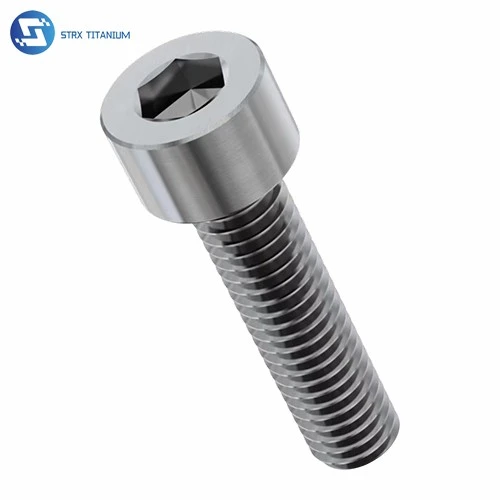

In the automotive industry, titanium bolts are sometimes used in high - performance engines. They're often paired with steel components. As mentioned earlier, the risk of galvanic corrosion is a concern. Automotive engineers use coatings and gaskets to protect the steel from corrosion and to ensure a reliable connection.
If you're in the market for high - quality Titanium Bolts, we've got you covered. Our Titanium Bolts are made from the finest grade of titanium, ensuring excellent strength and corrosion resistance. We also offer Titanium Screw and Titanium Threaded Rod for various applications.
Ensuring the compatibility of titanium bolts with other materials is a multi - faceted process. It involves considering electrochemical potential, mechanical properties, thermal expansion coefficients, and using appropriate solutions like non - metallic washers, coatings, and insulation. If you have any questions about our products or need advice on compatibility, don't hesitate to reach out. We're here to help you make the right choice for your project. Whether you're working on a small DIY project or a large - scale industrial application, our team of experts can provide you with the guidance you need. Contact us today to discuss your requirements and start a fruitful business relationship.
References
- "Corrosion of Metals" by John W. D. Craggs
- "Materials Science and Engineering: An Introduction" by William D. Callister Jr. and David G. Rethwisch
- Industry standards and guidelines related to titanium fasteners and material compatibility.