

As a trusted supplier of Titanium Bolts, I've witnessed firsthand the diverse applications and the growing importance of these remarkable components in various industries. Titanium bolts are favored for their high strength-to-weight ratio, excellent corrosion resistance, and biocompatibility. However, to fully leverage their potential, optimizing their performance is crucial. In this blog, I'll share some insights on how to achieve this.
Material Selection
The first step in optimizing the performance of titanium bolts is choosing the right grade of titanium. Titanium comes in several grades, each with unique properties. For example, Grade 2 titanium is known for its excellent corrosion resistance and formability, making it suitable for general - purpose applications where high strength is not the primary requirement. On the other hand, Grade 5 titanium, also known as Ti - 6Al - 4V, is a high - strength alloy that contains 6% aluminum and 4% vanadium. It offers a good balance of strength, corrosion resistance, and weldability, and is widely used in aerospace, automotive, and medical industries.
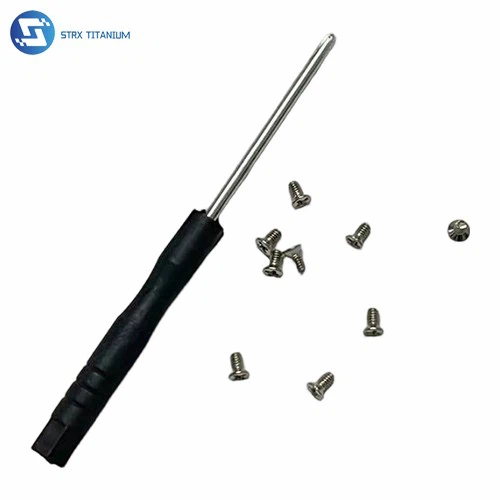

When selecting the grade, consider the specific requirements of your application, such as the load - bearing capacity, environmental conditions, and cost. If you're dealing with a corrosive environment, like in marine applications, a higher - grade titanium with better corrosion resistance would be more appropriate. Our company offers a wide range of titanium grades for Titanium Bolts, ensuring that you can find the perfect fit for your needs.
Manufacturing Process
The manufacturing process of titanium bolts significantly impacts their performance. Precision machining is essential to ensure accurate dimensions and high - quality threads. Any deviation in size or thread pitch can lead to improper fitting, which may compromise the joint's integrity and the overall performance of the bolts.
One critical aspect of the manufacturing process is heat treatment. Heat treatment can enhance the mechanical properties of titanium bolts, such as hardness and strength. For instance, solution treatment followed by aging can increase the strength of Grade 5 titanium bolts. However, the heat - treatment process must be carefully controlled to avoid over - hardening, which can make the bolts brittle and prone to cracking.
Another important factor is surface finishing. A smooth and clean surface reduces friction and wear, improving the bolt's fatigue resistance. Passivation is a common surface - finishing process for titanium bolts. It involves treating the bolts with an acid solution to remove surface contaminants and form a protective oxide layer, enhancing their corrosion resistance. Our manufacturing facilities are equipped with state - of - the - art machinery and adhere to strict quality control standards to produce high - performance titanium bolts.
Installation and Tightening
Proper installation and tightening of titanium bolts are crucial for optimizing their performance. Incorrect installation can lead to premature failure, such as bolt loosening or breakage. Before installation, it's important to clean the mating surfaces to remove any dirt, debris, or grease that could affect the bolt's grip.
Titanium has a relatively low coefficient of friction compared to other metals. This means that when tightening titanium bolts, it's essential to use a torque - control method to ensure the correct pre - load is applied. Over - tightening can cause the bolts to stretch or break, while under - tightening can result in joint looseness. Using a torque wrench and following the manufacturer's recommended torque values is highly recommended.
It's also important to consider the use of washers and lubricants during installation. Washers can distribute the load evenly and prevent damage to the mating surfaces. Lubricants can reduce friction during tightening, allowing for more accurate torque application and preventing galling, which is a form of adhesive wear that can occur between the bolt and the nut.
Maintenance and Inspection
Regular maintenance and inspection of titanium bolts are necessary to ensure their long - term performance. Inspect the bolts for signs of corrosion, wear, or damage. Even though titanium has excellent corrosion resistance, it can still corrode under certain aggressive environmental conditions, such as exposure to high - chloride environments.
If any signs of corrosion are detected, appropriate action should be taken immediately. This may involve cleaning the bolts with a mild cleaning agent or applying a corrosion - resistant coating. For wear or damage, if the bolts are within their service life, they can sometimes be repaired. However, in most cases, it's advisable to replace the damaged bolts to prevent potential failures.
In addition, monitor the tightness of the bolts periodically. Vibration or thermal cycling can cause the bolts to loosen over time. If the bolts are found to be loose, re - tighten them according to the recommended torque values.
Application - Specific Considerations
Different applications may have unique requirements for the performance of titanium bolts. In aerospace applications, for example, where weight and strength are critical factors, maximizing the strength - to - weight ratio of titanium bolts is of utmost importance. This may involve using advanced manufacturing techniques to produce bolts with complex geometries and high - strength alloys.
In the medical industry, biocompatibility is a key consideration. Titanium bolts used in medical implants must not only be strong and corrosion - resistant but also non - toxic and compatible with the human body. Special surface treatments may be required to improve the biocompatibility of the bolts.
Our company offers specialized Titanium Micro Mini Bolts Kits for applications where miniaturization is required, such as in electronics and some medical devices. These kits are designed to meet the specific needs of these applications, ensuring high - performance and reliable operation.
Complementary Products
In addition to titanium bolts, Titanium Threaded Rod is another important product in our portfolio. Threaded rods can be used in combination with titanium bolts to create more complex fastening systems. They offer flexibility in terms of length and can be cut to the required size on - site.
The performance of threaded rods also needs to be optimized in a similar way to titanium bolts. Material selection, manufacturing process, installation, and maintenance are all critical factors. By offering a comprehensive range of titanium fasteners, we can provide our customers with complete solutions for their fastening needs.
Conclusion
Optimizing the performance of titanium bolts involves a combination of factors, including material selection, manufacturing process, installation, maintenance, and application - specific considerations. As a leading supplier of titanium bolts and related products, we are committed to providing high - quality products and technical support to help our customers get the most out of their titanium fasteners.
If you're interested in learning more about our titanium bolts or have specific requirements for your application, we invite you to contact us for a detailed discussion. Our team of experts is ready to assist you in selecting the right products and optimizing their performance for your needs.
References
- ASM Handbook Committee. (2005). ASM Handbook, Volume 2: Properties and Selection: Nonferrous Alloys and Special - Purpose Materials. ASM International.
- Harris, C. M. (2001). Shock and Vibration Handbook. McGraw - Hill.
- John R. Davis, R. (2016). Titanium and Titanium Alloys: Properties, Processing, and Applications. ASM International.