

Cyclic loading is a common phenomenon in many industrial applications, where components are subjected to repeated loads over time. This type of loading can significantly impact the performance and durability of materials. As a leading supplier of titanium flanges, I have witnessed firsthand the importance of understanding how these components perform under cyclic loading. In this blog, I will delve into the characteristics of titanium flanges and their performance under cyclic loading conditions.
Characteristics of Titanium Flanges
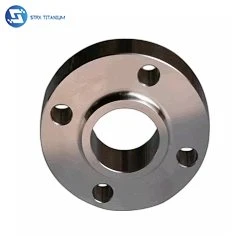
Titanium is a highly versatile metal known for its excellent properties, which make it a popular choice for various industrial applications, including flanges. Titanium flanges offer several advantages over other materials such as steel and aluminum. Here are some key characteristics of titanium flanges:
High Strength-to-Weight Ratio
Titanium has a high strength-to-weight ratio, which means it can withstand high loads while being relatively lightweight. This property is particularly beneficial in applications where weight reduction is crucial, such as in aerospace and marine industries.

Corrosion Resistance
Titanium is highly resistant to corrosion, even in harsh environments. It forms a protective oxide layer on its surface when exposed to oxygen, which prevents further corrosion. This makes titanium flanges ideal for use in chemical processing plants, offshore oil and gas platforms, and other corrosive environments.
Biocompatibility
Titanium is biocompatible, which means it is not harmful to living tissues. This property makes it suitable for use in medical applications, such as in orthopedic implants and dental fixtures.
High Temperature Resistance
Titanium can maintain its strength and mechanical properties at high temperatures. It has a melting point of around 1,668°C (3,034°F), which allows it to be used in applications where high temperatures are involved, such as in jet engines and power generation.
Performance of Titanium Flanges Under Cyclic Loading
Cyclic loading can cause fatigue in materials, which is the progressive damage and failure that occurs due to repeated loading. The performance of titanium flanges under cyclic loading depends on several factors, including the type of titanium alloy, the design of the flange, and the loading conditions.
Titanium Alloys
There are several types of titanium alloys available, each with different properties and performance characteristics. For example, Ti-6Al-4V is one of the most commonly used titanium alloys for flanges. It has a good combination of strength, ductility, and corrosion resistance. Under cyclic loading, Ti-6Al-4V flanges can exhibit excellent fatigue resistance due to their high strength and good crack growth resistance.
Flange Design
The design of the titanium flange also plays a crucial role in its performance under cyclic loading. A well-designed flange should have a smooth surface finish, proper fillet radii, and no sharp edges or notches. These features help to reduce stress concentration, which can lead to fatigue cracking. Additionally, the flange should be properly sized and dimensioned to ensure a good fit and to distribute the loads evenly.
Loading Conditions
The loading conditions, such as the amplitude, frequency, and mean stress of the cyclic load, can significantly affect the performance of titanium flanges. High amplitude loads and high frequencies can increase the likelihood of fatigue failure. Mean stress also plays an important role, as a tensile mean stress can accelerate crack growth, while a compressive mean stress can retard it.
Case Studies and Research Findings
Numerous studies have been conducted to evaluate the performance of titanium flanges under cyclic loading. For example, research has shown that titanium flanges made from Ti-6Al-4V alloy can withstand a large number of load cycles before failure occurs. In some cases, these flanges have been tested under extreme cyclic loading conditions and have demonstrated excellent fatigue life.
In a case study conducted in the aerospace industry, titanium flanges were used in an aircraft engine. The flanges were subjected to cyclic loading due to the vibrations and thermal cycling experienced during engine operation. After extensive testing and monitoring, it was found that the titanium flanges maintained their integrity and performance over a long period of time, demonstrating their suitability for use in high-stress cyclic loading applications.
Applications of Titanium Flanges Under Cyclic Loading
Titanium flanges are widely used in various industries where cyclic loading is present. Some of the common applications include:
Aerospace Industry
In the aerospace industry, titanium flanges are used in aircraft engines, fuel systems, and hydraulic systems. These components are subjected to cyclic loading due to vibrations, thermal cycling, and dynamic forces during flight. The high strength-to-weight ratio and corrosion resistance of titanium flanges make them an ideal choice for these applications.
Oil and Gas Industry
In the oil and gas industry, titanium flanges are used in offshore platforms, pipelines, and refineries. These components are exposed to cyclic loading due to waves, tides, and pressure fluctuations. The corrosion resistance of titanium flanges ensures their long-term performance in the harsh marine environment.
Power Generation Industry
In the power generation industry, titanium flanges are used in steam turbines, gas turbines, and nuclear reactors. These components are subjected to cyclic loading due to thermal cycling and mechanical vibrations. The high temperature resistance and fatigue resistance of titanium flanges make them suitable for use in these high-stress applications.
Our Titanium Flange Products
As a reliable titanium flange supplier, we offer a wide range of high-quality titanium flanges to meet the diverse needs of our customers. Our product portfolio includes Titanium Ring Joint Flanges, Forged Titanium Flange, and Titanium Welding Neck Flange. These flanges are manufactured using the latest technology and high-grade titanium alloys, ensuring excellent performance under cyclic loading and in various harsh environments.
Whether you are in the aerospace, oil and gas, or power generation industry, our titanium flanges can provide you with the durability and reliability you need. We are committed to providing our customers with the best products and services, and we welcome you to contact us for procurement discussions and to learn more about how our titanium flanges can meet your specific requirements.
Conclusion
In conclusion, titanium flanges offer excellent performance under cyclic loading due to their high strength-to-weight ratio, corrosion resistance, and fatigue resistance. The choice of titanium alloy, flange design, and loading conditions all play important roles in determining their performance. Through extensive research and real-world applications, it has been proven that titanium flanges are a reliable choice for industries where cyclic loading is a common challenge.
If you are looking for high-quality titanium flanges for your cyclic loading applications, please don't hesitate to reach out to us. We are here to assist you in finding the right solution for your needs and to ensure the success of your projects.
References
- Boyer, R., Welsch, G., & Collings, E. W. (1994). Materials Properties Handbook: Titanium Alloys. ASM International.
- Fatigue of Metals: Understanding the Basics, ASM International Handbook Committee. (2007). ASM International.