

Hey there! As a supplier of Forged Titanium Flange, I've seen firsthand how crucial it is to pick the right flange for a specific application. In this blog, I'll share some tips and insights to help you make an informed decision.
Understanding Your Application
First things first, you need to have a clear understanding of your application. What kind of environment will the flange be operating in? Is it a high - pressure situation, or maybe a corrosive one? These factors play a huge role in determining the right flange.
For instance, if you're dealing with a high - pressure system, you'll need a flange that can withstand the stress. Forged Titanium Flanges are known for their strength, but different types have different pressure ratings. You can check out our Forged Titanium Flange page to get an idea of the options available.
On the other hand, if the application is in a corrosive environment, like in a chemical plant or near the ocean, titanium's corrosion - resistant properties are a big plus. Titanium can resist rust and corrosion from many chemicals and saltwater, making it a great choice for these types of applications.
Types of Forged Titanium Flanges
There are several types of forged titanium flanges, and each has its own advantages and uses.
Weld Neck Flanges
Weld neck flanges are a popular choice for high - pressure applications. They have a long tapered hub that is welded to the pipe. This design provides a smooth flow of stress from the flange to the pipe, reducing the risk of failure under high pressure. If your application involves high - pressure fluids or gases, weld neck flanges might be the way to go.
Slip - On Flanges
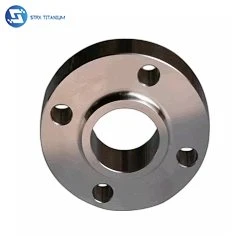
Slip - on flanges are easier to install compared to weld neck flanges. They slide over the pipe and are then welded in place. These flanges are a good option for low - to medium - pressure applications where ease of installation is a priority.
Socket Weld Flanges
Socket weld flanges are similar to slip - on flanges, but they have a socket where the pipe fits into. They are often used for small - diameter pipes and low - to medium - pressure applications.
Titanium Blind Flange
Blind flanges are used to close the end of a pipe. They don't have a center hole, so they block the flow of fluid or gas. You might use a titanium blind flange when you need to temporarily or permanently close a pipeline for maintenance or other reasons.
Titanium Ring Joint Flanges
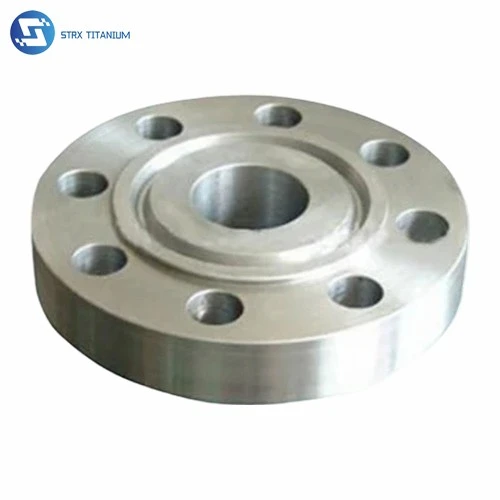
Ring joint flanges are designed for high - pressure and high - temperature applications. They use a metal ring gasket that fits into a groove in the flange face. This creates a tight seal that can withstand extreme conditions.
Size and Dimensions
The size and dimensions of the flange are also important. You need to make sure the flange matches the size of the pipe it will be connected to. The diameter, thickness, and bolt hole pattern of the flange should all be compatible with the pipe and the other components in the system.
Measure the outside diameter of the pipe accurately. You can usually find standard sizes for pipes and flanges, but if you have a custom - sized pipe, you might need a custom - made flange. Don't worry, as a supplier, we can provide custom - sized forged titanium flanges to meet your specific needs.
Material Grade
Titanium comes in different grades, and each grade has different properties. The most common grades used for flanges are Grade 2 and Grade 5.
Grade 2 titanium is unalloyed and has good corrosion resistance. It's a cost - effective option for many applications where high strength isn't the primary requirement.
Grade 5 titanium, also known as Ti - 6Al - 4V, is an alloy that contains aluminum and vanadium. It has higher strength than Grade 2 and is often used in applications where strength and corrosion resistance are both important, like in aerospace and high - performance industrial applications.
Pressure Rating
The pressure rating of the flange indicates the maximum pressure it can safely handle. You need to know the operating pressure of your system and choose a flange with a pressure rating that is equal to or higher than that.
For example, if your system operates at 1000 psi, you should choose a flange with a pressure rating of at least 1000 psi. It's always better to have a little extra margin of safety, so you might consider a flange with a slightly higher pressure rating.
Surface Finish
The surface finish of the flange can also affect its performance. A smooth surface finish can reduce friction and improve the sealing performance of the flange. It can also make the flange easier to clean and maintain.
We offer different surface finishes for our forged titanium flanges, such as polished or brushed finishes. You can choose the surface finish that best suits your application.
Cost Considerations
Cost is always a factor when choosing a flange. Titanium flanges can be more expensive than flanges made from other materials, but their long - term benefits, such as corrosion resistance and durability, can often justify the higher cost.
When comparing prices, make sure you're comparing flanges of the same size, grade, and quality. Don't just go for the cheapest option, as it might not meet your performance requirements.
Installation and Maintenance
Think about the installation and maintenance requirements of the flange. Some flanges are easier to install than others, and some require less maintenance.
For example, slip - on flanges are relatively easy to install, while ring joint flanges might require more precise installation to ensure a proper seal. Also, consider the maintenance schedule and the cost of maintenance when choosing a flange.
Conclusion
Choosing the right forged titanium flange for a specific application is a multi - step process. You need to consider factors like the application environment, type of flange, size and dimensions, material grade, pressure rating, surface finish, cost, and installation and maintenance requirements.
As a supplier of Forged Titanium Flanges, we're here to help you make the right choice. If you have any questions or need more information, don't hesitate to reach out. We can provide you with detailed product specifications, technical support, and even custom - made solutions.
Whether you're working on a small - scale project or a large - scale industrial application, we have the expertise and the products to meet your needs. So, if you're in the market for forged titanium flanges, get in touch with us for a procurement discussion. We're looking forward to working with you!
References
- ASME B16.5 - Pipe Flanges and Flanged Fittings
- ASTM Standards for Titanium and Titanium Alloys