

Elongation is a crucial mechanical property that significantly influences the performance and safety of various components in engineering and manufacturing. When it comes to titanium washers, understanding their elongation characteristics is essential for ensuring proper functionality and reliability in different applications. As a leading titanium washer supplier, we recognize the importance of this property and are committed to providing high - quality products with optimal elongation properties.
The Concept of Elongation
Elongation, in materials science, refers to the increase in length of a material when it is subjected to a tensile force. It is typically expressed as a percentage and is calculated by comparing the change in length of the material after it has been stretched to its original length. Mathematically, the formula for elongation is:
[Elongation(%)=\frac{L - L_0}{L_0}\times100]
where (L_0) is the original length of the material and (L) is the length of the material after it has been stretched.
The elongation of a material is a measure of its ductility. A material with high elongation can be stretched significantly before it breaks, indicating good ductility. On the other hand, a material with low elongation is more brittle and may fracture under relatively low tensile stress.
Factors Affecting the Elongation of Titanium Washers
Titanium Alloy Composition
Titanium is rarely used in its pure form; instead, it is often alloyed with other elements such as aluminum, vanadium, and tin to enhance its mechanical properties. Different alloy compositions can have a profound impact on the elongation of titanium washers. For example, titanium - 6Al - 4V alloy, one of the most widely used titanium alloys, has excellent strength - to - weight ratio and good ductility, which results in a relatively high elongation value. This alloy can be used in various applications where the washers need to withstand some degree of deformation without failure.
Manufacturing Process
The way titanium washers are manufactured also affects their elongation. Processes such as forging, rolling, and machining can introduce different degrees of work - hardening and residual stress in the washers. Forging can align the grain structure of the titanium alloy, which may improve the elongation in some cases. Precision machining can ensure the uniformity of the washer's thickness and shape, reducing stress concentrations that could lead to premature failure and thereby maintaining a consistent elongation performance.
Heat Treatment
Heat treatment is a critical step in the production of titanium washers that can significantly alter their mechanical properties, including elongation. Annealing, for instance, is a heat - treatment process that involves heating the titanium washers to a specific temperature and then slowly cooling them. This process can relieve internal stresses, refine the grain structure, and improve the ductility of the washers, leading to an increase in elongation. On the other hand, improper heat treatment can result in a decrease in elongation and make the washers more prone to cracking.
Importance of Elongation in Titanium Washer Applications
Structural Integrity
In many structural applications, such as in aerospace and automotive industries, titanium washers are used to distribute loads and prevent the loosening of fasteners. Adequate elongation ensures that the washers can deform slightly under load without breaking, which helps in maintaining the integrity of the joint. For example, in an aircraft wing joint, the titanium washers need to be able to accommodate small movements due to vibrations and thermal expansion. If the elongation of the washers is too low, they may crack, which could compromise the safety of the aircraft.
Corrosion Resistance Maintenance
Titanium is known for its excellent corrosion resistance. When the washers have sufficient elongation, they can adapt to the shape changes that may occur during service, such as those caused by the expansion or contraction of the joined materials. This adaptability helps to maintain the protective oxide layer on the surface of the titanium washers, preventing corrosion. In marine applications, where the washers are exposed to a harsh salt - water environment, maintaining corrosion resistance through proper elongation is critical for the long - term performance of the components.
Testing the Elongation of Titanium Washers
To ensure that our titanium washers meet the required quality standards, we conduct rigorous testing of their elongation properties. We use a standard tensile testing machine to apply a gradually increasing tensile force to a sample washer until it breaks. During the test, we measure the change in length of the washer and calculate the elongation percentage according to the formula mentioned above.
We also follow relevant international standards, such as ASTM (American Society for Testing and Materials) and ISO (International Organization for Standardization) standards, which provide detailed procedures for material testing. By adhering to these standards, we can accurately characterize the elongation of our titanium washers and provide our customers with reliable and consistent products.
Complementary Titanium Fasteners
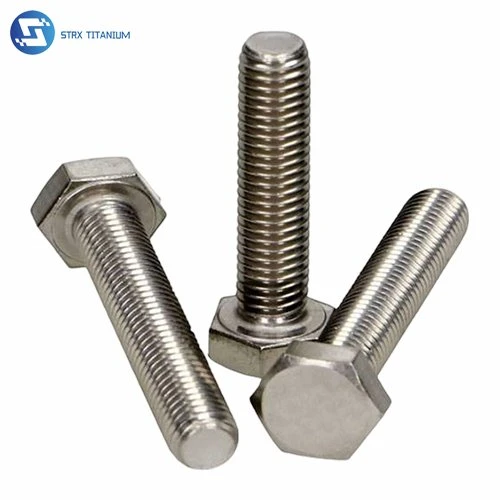
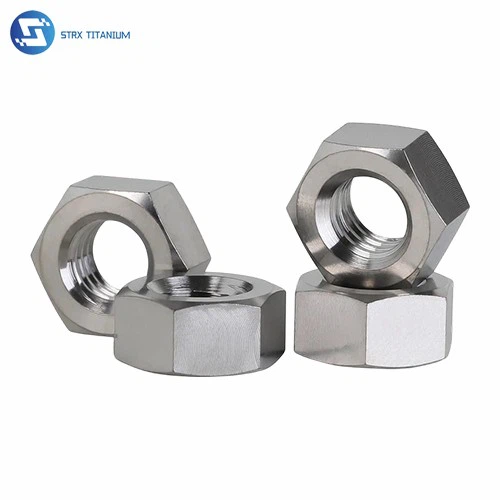
In addition to titanium washers, we also offer a wide range of complementary titanium fasteners. If you are looking for reliable and high - performance fasteners, you may be interested in our Titanium Screw, Titanium Threaded Rod, and Titanium Nut. These fasteners are made from the same high - quality titanium alloys as our washers, ensuring compatibility and optimal performance in various applications.
How to Select Titanium Washers Based on Elongation
When selecting titanium washers, it is important to consider the specific requirements of the application. For applications where the washers are subjected to high levels of stress and deformation, such as in heavy - machinery or high - performance racing vehicles, washers with high elongation are preferred. These washers can withstand significant stretching without breaking, providing better reliability and safety.
On the other hand, for applications where the washers are not expected to undergo much deformation, but where a high level of hardness and strength is required, washers with relatively lower elongation may be suitable. For example, in some electronic devices where the washers are mainly used for electrical insulation and minimal load - bearing purposes, a lower - elongation washer may be a cost - effective choice.
We're Here to Meet Your Needs
As a professional titanium washer supplier, we have extensive experience in producing and supplying high - quality titanium washers with a wide range of elongation properties. Our products are carefully manufactured and tested to ensure that they meet the most stringent quality standards. Whether you are in the aerospace, automotive, marine, or any other industry, we can provide you with the right titanium washers to meet your specific requirements.
If you are interested in our titanium washers or would like to discuss your specific project requirements, we encourage you to contact us for a detailed consultation. We look forward to the opportunity to work with you and provide you with the best solutions for your fastening needs.
References
- "Properties and Applications of Titanium Alloys" by Nicholas, M. G.
- ASTM Standards related to titanium material testing
- ISO Standards for metal material mechanical property testing