

Hey there! As a supplier of Titanium Threaded Rods, I often get asked about the fatigue life of these nifty little things. So, I thought I'd sit down and write a blog post to share what I know.
Let's start by understanding what fatigue life actually means. In simple terms, fatigue life is the number of loading cycles a material can withstand before it fails due to fatigue. Fatigue failure is a common issue in materials that are subjected to repeated loading, like the Titanium Threaded Rods we supply. It's not like a sudden break; instead, it happens gradually as tiny cracks form and grow over time until the rod can no longer hold up.
Now, what affects the fatigue life of Titanium Threaded Rods? Well, there are several factors. First up is the material quality. Titanium is known for its excellent strength - to - weight ratio and corrosion resistance, but not all titanium is created equal. The purity of the titanium used in the rods plays a huge role. Higher - purity titanium generally has better fatigue properties because there are fewer impurities that can act as stress concentrators and initiate crack growth.
The manufacturing process also matters a great deal. How the rods are forged, machined, and heat - treated can significantly impact their fatigue life. For example, if the threading process isn't done correctly, it can create sharp edges or surface irregularities that can become the starting points for cracks. Proper heat treatment can improve the microstructure of the titanium, making it more resistant to fatigue.
Another important factor is the loading conditions. If the Titanium Threaded Rods are used in an application where they are subjected to high - stress cyclic loads, their fatigue life will be shorter compared to a low - stress application. The frequency of the loading cycles also matters. High - frequency loading can cause more rapid crack growth than low - frequency loading.
The environment in which the rods are used is yet another consideration. Titanium is highly corrosion - resistant, but in some aggressive environments, like those with high levels of chloride ions or certain chemicals, corrosion can still occur. Corrosion can weaken the surface of the rod, reducing its fatigue life. Even things like temperature can have an impact. Extreme temperatures can change the mechanical properties of titanium, affecting its ability to withstand cyclic loading.
To give you a better idea of how these factors interact, let's look at a real - world example. Say you're using our Titanium Threaded Rod in a marine application. The rods are constantly exposed to saltwater, which contains chloride ions. The saltwater can cause some surface corrosion on the rods. At the same time, the rods are also subjected to the cyclic loading from the movement of the vessel. This combination of corrosion and cyclic loading can lead to a significant reduction in the fatigue life of the rods.
So, how can we estimate the fatigue life of Titanium Threaded Rods? Well, there are several methods. One common approach is to use fatigue testing. In a laboratory setting, samples of the rods are subjected to controlled cyclic loading until they fail. By analyzing the data from these tests, engineers can develop fatigue curves that show the relationship between the stress level and the number of cycles to failure. These curves can then be used to estimate the fatigue life of the rods in a real - world application.
Another method is finite element analysis (FEA). FEA is a computer - based simulation technique that can model the behavior of the rods under different loading conditions. By inputting the material properties, geometry, and loading conditions of the rods, engineers can predict where stress concentrations are likely to occur and how cracks might propagate. This can give us an idea of the expected fatigue life without having to conduct extensive physical testing.

Now, you might be wondering how our Titanium Threaded Rods stack up in terms of fatigue life compared to other materials. Well, titanium generally has a better fatigue life than many other metals, like steel. Steel is more prone to corrosion, which can quickly reduce its fatigue resistance. And even though steel is strong, titanium's high strength - to - weight ratio means that you can use lighter rods without sacrificing much in terms of fatigue performance.
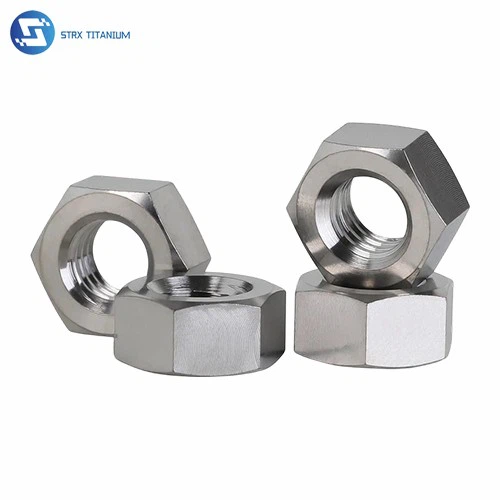
If you're looking for other titanium fasteners to go with our threaded rods, we also offer Titanium Nut and Titanium Micro Mini Bolts Kits. These products are made with the same high - quality titanium and are designed to work well together, ensuring a reliable fastening solution.
In conclusion, the fatigue life of Titanium Threaded Rods is a complex topic that depends on multiple factors. As a supplier, we take all these factors into account when manufacturing our rods. We use high - quality titanium, employ advanced manufacturing processes, and conduct rigorous quality control to ensure that our rods have a long fatigue life.
If you're in the market for Titanium Threaded Rods or any of our other titanium fasteners, and you have questions about fatigue life or any other aspect of our products, don't hesitate to reach out. We're here to help you find the right solution for your application. Whether it's for a high - stress aerospace application or a low - stress industrial use, we've got the expertise to assist you. Contact us to start a discussion about your specific requirements and let's see how we can work together to meet your needs.
References
- "Fatigue of Metals" by Suresh S.
- "Titanium: A Technical Guide" by Don Eylon