

Titanium blind flanges are crucial components in various industrial applications, known for their unique set of strengths that make them stand out among other flange materials. As a supplier of titanium blind flanges, I have witnessed firsthand the growing demand for these products due to their exceptional properties. In this blog, I will delve into the key strengths of titanium blind flanges and explain why they are an excellent choice for many industries.
High Corrosion Resistance
One of the most significant strengths of titanium blind flanges is their outstanding corrosion resistance. Titanium forms a thin, protective oxide layer on its surface when exposed to oxygen. This oxide layer is highly stable and adherent, providing excellent protection against a wide range of corrosive environments, including seawater, acids, alkalis, and many chemical substances.
In marine applications, for example, where components are constantly exposed to saltwater, titanium blind flanges can resist the corrosive effects of chloride ions, which can cause severe damage to other metals such as steel. This corrosion resistance not only extends the service life of the flanges but also reduces maintenance costs and the risk of system failures.
In the chemical processing industry, titanium blind flanges are used in environments where they come into contact with aggressive chemicals. Their ability to withstand corrosion ensures the integrity of the piping systems and prevents leaks, which can be hazardous and costly. This makes titanium blind flanges a reliable choice for applications where safety and durability are of utmost importance.
Low Density and High Strength-to-Weight Ratio
Titanium has a relatively low density compared to many other metals, such as steel. This low density, combined with its high strength, results in a high strength-to-weight ratio. Titanium blind flanges are lighter than their steel counterparts of the same size and strength, which offers several advantages.
In industries where weight is a critical factor, such as aerospace and automotive, the use of titanium blind flanges can help reduce the overall weight of the structures or vehicles. This, in turn, can lead to improved fuel efficiency, lower operating costs, and increased payload capacity.
In addition, the high strength-to-weight ratio of titanium blind flanges makes them easier to handle and install. Their lighter weight reduces the physical strain on workers during installation and transportation, which can improve safety and productivity on the job site.
Excellent Fatigue Resistance
Titanium blind flanges exhibit excellent fatigue resistance, which is the ability to withstand repeated loading and unloading without failure. In many industrial applications, flanges are subjected to cyclic stresses due to factors such as pressure fluctuations, vibration, and thermal expansion and contraction.
The fatigue resistance of titanium blind flanges ensures that they can maintain their structural integrity over a long period of time, even under harsh operating conditions. This is particularly important in applications where the flanges are part of critical systems, such as in power generation plants and oil and gas pipelines.
The ability of titanium blind flanges to resist fatigue also reduces the risk of sudden failures, which can have serious consequences in terms of safety, production downtime, and repair costs. By choosing titanium blind flanges, industries can enhance the reliability and safety of their operations.
Good Biocompatibility
Titanium is well-known for its good biocompatibility, which means it is not harmful to living tissues and can be used in medical and biological applications. In the medical field, titanium blind flanges are used in equipment such as surgical instruments and implantable devices.
The biocompatibility of titanium ensures that it does not cause adverse reactions in the human body, such as inflammation or allergic responses. This makes it a suitable material for applications where direct contact with living tissues is required.
In addition, the corrosion resistance of titanium in the human body environment further enhances its suitability for medical applications. Titanium blind flanges used in medical equipment can maintain their performance and integrity over a long period of time, providing reliable and safe operation.

High Temperature Resistance
Titanium blind flanges can withstand high temperatures without significant loss of strength or corrosion resistance. This makes them suitable for applications in high-temperature environments, such as in the petrochemical and power generation industries.
In petrochemical plants, for example, titanium blind flanges are used in processes where they are exposed to high temperatures and aggressive chemicals. Their ability to maintain their properties at high temperatures ensures the efficient and safe operation of the plants.
In power generation plants, titanium blind flanges are used in steam turbines and other high-temperature components. Their high temperature resistance helps to prevent deformation and failure of the flanges, which can lead to system outages and costly repairs.
Compatibility with Other Materials
Titanium blind flanges can be easily integrated with other materials in a piping system. They can be connected to pipes made of different materials, such as steel, stainless steel, and plastic, using appropriate joining methods.
This compatibility allows for flexibility in the design and construction of piping systems. Industries can choose the most suitable materials for different parts of the system based on factors such as cost, performance, and availability, while still using titanium blind flanges for their superior properties.
For example, in a piping system where cost is a major consideration, steel pipes can be used in non-critical sections, while titanium blind flanges can be used in areas where corrosion resistance or high strength is required. This combination of materials can provide a cost-effective solution without compromising the performance of the system.
Availability of Different Types
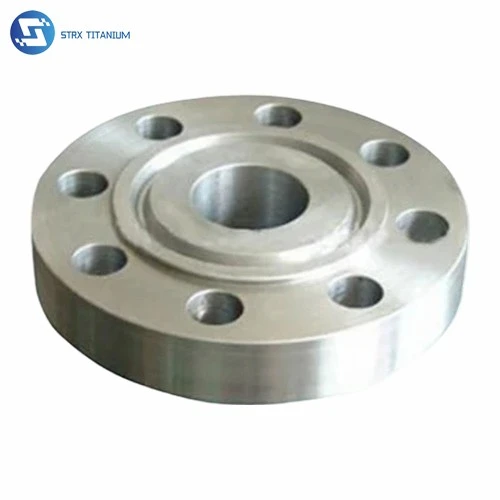
As a supplier, I offer a wide range of titanium blind flanges to meet the diverse needs of different industries. In addition to standard blind flanges, we also provide Titanium Ring Joint Flanges, Titanium Lap Joint Flange, and Plate Ring Flange.
Titanium Ring Joint Flanges are designed for high-pressure and high-temperature applications. They use a metal ring gasket to provide a tight seal, which is suitable for applications where leak prevention is critical.
Titanium Lap Joint Flanges are easy to install and remove, making them suitable for applications where frequent maintenance or inspection is required. They consist of a lap joint stub end and a loose backing flange, which allows for easy alignment and adjustment.
Plate Ring Flanges are used in applications where a flat face is required. They are often used in low-pressure and non-critical applications, providing a cost-effective solution.
Conclusion
In conclusion, the strengths of titanium blind flanges, including high corrosion resistance, low density and high strength-to-weight ratio, excellent fatigue resistance, good biocompatibility, high temperature resistance, compatibility with other materials, and availability of different types, make them an ideal choice for a wide range of industrial applications.
As a supplier of titanium blind flanges, I am committed to providing high-quality products that meet the strictest industry standards. If you are looking for reliable and durable titanium blind flanges for your project, I encourage you to contact me for more information and to discuss your specific requirements. We can work together to find the best solution for your needs.
References
- ASME B16.5 - Pipe Flanges and Flanged Fittings
- ASTM B348 - Standard Specification for Titanium and Titanium Alloy Bars and Billets
- ISO 7005 - Metallic Flanges for Pipes, Valves, Fittings and Accessories - Steel, Cast Iron and Copper - Alloy Flanges