

Hey there! As a supplier of forged titanium flanges, I often get asked about the age - old question: which is better, forged or cast titanium flanges? Well, let's dive right into it and break down the differences, advantages, and disadvantages of both.

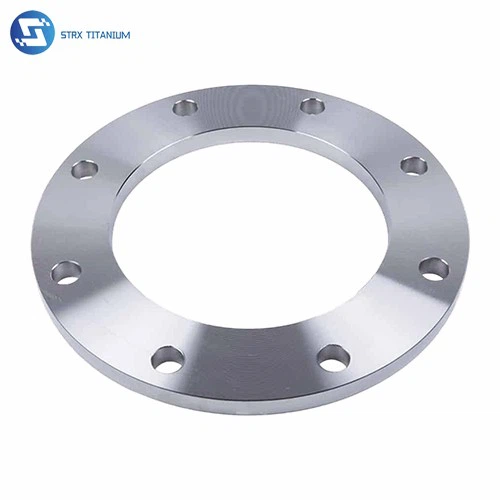
Forged Titanium Flanges
First off, let's talk about forged titanium flanges. Forging is a process where metal is heated and then shaped using compressive forces. When it comes to titanium, forging offers some really cool benefits.
One of the major advantages is strength. Forged titanium flanges have a much higher strength - to - weight ratio compared to their cast counterparts. The forging process aligns the grain structure of the titanium, which makes the flange more resistant to fatigue and stress. This is super important in applications where the flange will be under a lot of pressure, like in high - pressure pipelines or in the aerospace industry.
Another great thing about forged flanges is their dimensional accuracy. Since the forging process is more controlled, we can achieve very precise dimensions. This means that when you're installing a forged titanium flange, it's more likely to fit perfectly, reducing the chances of leaks and other issues.
Forged titanium flanges also have better ductility. Ductility is the ability of a material to deform under stress without breaking. In the case of forged titanium flanges, they can withstand a certain amount of bending and stretching without cracking. This is crucial in applications where the flange might be subject to vibrations or movement.
Now, I know what you're thinking. Sounds great, but what's the catch? Well, the main drawback of forged titanium flanges is the cost. The forging process is more complex and time - consuming, which drives up the price. Also, the production time can be longer, especially if you need a custom - made flange.
Cast Titanium Flanges
On the other hand, we have cast titanium flanges. Casting is a process where molten metal is poured into a mold and then allowed to solidify.
One of the biggest advantages of cast titanium flanges is their ability to be made into complex shapes. If you have a design that has intricate details or a non - standard shape, casting might be the way to go. Casting allows for a high degree of flexibility in terms of design.
Cost - wise, cast titanium flanges can be more affordable than forged ones. The casting process is generally less labor - intensive and can be done in larger quantities more quickly. This makes them a good option for projects with a tight budget.
However, cast titanium flanges also have their downsides. They tend to have a more porous structure compared to forged flanges. This porosity can lead to issues with corrosion and reduced strength. The grain structure in cast flanges is also less uniform, which can make them more prone to cracking under stress.
Comparison in Different Applications
Let's take a look at how these two types of flanges perform in different applications.
In the oil and gas industry, where pipelines are under high pressure and need to be extremely reliable, forged titanium flanges are often the preferred choice. Their high strength and resistance to fatigue make them ideal for handling the harsh conditions in this industry. For example, in offshore oil rigs, where the flanges are exposed to saltwater and high - pressure environments, forged flanges can ensure a long - lasting and leak - free connection.
In the automotive industry, both forged and cast titanium flanges have their uses. For high - performance vehicles, forged flanges are often used in critical components like the exhaust system. The high strength and ductility of forged flanges can handle the high temperatures and vibrations associated with high - speed driving. On the other hand, cast flanges might be used in less critical parts where cost is a major factor.
In the aerospace industry, forged titanium flanges are almost always the go - to option. The strict safety and performance requirements in this industry demand the highest quality materials. Forged flanges offer the strength, precision, and reliability needed for aircraft engines, landing gear, and other critical components.
Where to Find Different Types of Titanium Flanges
If you're interested in different types of titanium flanges, you can check out some of the options on our website. For example, we have Titanium Weld Neck Flange, which are great for applications where a strong and reliable connection is needed. We also offer Titanium Ring Joint Flanges, which are designed for high - pressure and high - temperature applications. And if you're looking for something a bit different, we have Plate Ring Flange as well.
Making the Decision
So, which is better, forged or cast titanium flanges? Well, it really depends on your specific needs. If you need a flange with high strength, precision, and resistance to fatigue, forged titanium flanges are the way to go. But if you're on a tight budget and need a flange with a complex shape, cast titanium flanges might be more suitable.
If you're still not sure which type of flange is right for your project, don't hesitate to reach out. We're here to help you make the best decision based on your requirements. Whether you're working on a small - scale project or a large - scale industrial application, we can provide you with the right titanium flanges.
Contact for Purchase
If you're interested in purchasing titanium flanges, whether forged or cast, we're ready to have a chat with you. We can discuss your specific needs, provide you with a quote, and help you get the flanges you need as quickly as possible. Just drop us a line and let's start the conversation.
References
- ASM Handbook, Volume 14A: Metalworking: Forging
- Cast Metals Handbook: Properties, Processes, and Applications