

Storage plays a crucial role in maintaining the quality and performance of titanium nuts. As a supplier of titanium nuts, I have witnessed firsthand how improper storage can lead to a decline in their performance. In this blog post, I will explore the various ways in which storage affects the performance of titanium nuts and provide some tips on how to store them properly.
Oxidation and Corrosion
Titanium is a highly reactive metal that can easily react with oxygen in the air to form a thin oxide layer on its surface. This oxide layer is generally protective and can prevent further oxidation and corrosion. However, if the titanium nuts are stored in a humid or corrosive environment, the oxide layer can be damaged, exposing the underlying metal to further oxidation and corrosion.
When titanium nuts are exposed to moisture, the water molecules can react with the titanium to form titanium hydroxide, which can then further react with oxygen to form titanium dioxide. This process can lead to the formation of rust and corrosion on the surface of the nuts, which can weaken their structure and reduce their performance.
To prevent oxidation and corrosion, it is important to store titanium nuts in a dry and clean environment. Ideally, the storage area should have a relative humidity of less than 50% and be free from any sources of moisture or corrosive substances. Additionally, it is recommended to store the nuts in a sealed container or bag to prevent exposure to air and moisture.
Contamination
Another factor that can affect the performance of titanium nuts is contamination. During storage, the nuts can come into contact with various contaminants, such as dirt, dust, grease, and chemicals. These contaminants can adhere to the surface of the nuts and cause damage to the oxide layer, which can lead to oxidation and corrosion.
Contamination can also affect the mechanical properties of the nuts. For example, if the nuts are contaminated with grease or oil, it can reduce the friction between the threads, which can lead to loosening of the nuts over time. Additionally, if the nuts are contaminated with chemicals, it can cause chemical reactions that can weaken the structure of the nuts.
To prevent contamination, it is important to handle the titanium nuts with clean hands and tools. Additionally, it is recommended to store the nuts in a clean and dust-free environment. If the nuts need to be cleaned, it is important to use a mild detergent and water, and to dry them thoroughly before storing them.
Temperature and Pressure
Temperature and pressure can also affect the performance of titanium nuts. Titanium has a relatively low coefficient of thermal expansion, which means that it expands and contracts less than other metals when exposed to changes in temperature. However, if the nuts are stored in a high-temperature environment, it can cause the metal to expand and contract, which can lead to stress and fatigue in the nuts.
Similarly, if the nuts are stored in a high-pressure environment, it can cause the metal to deform and crack, which can reduce their performance. To prevent damage from temperature and pressure, it is important to store the titanium nuts in a stable environment with a consistent temperature and pressure.
Storage Conditions for Different Grades of Titanium Nuts
Different grades of titanium nuts have different properties and require different storage conditions. For example, titanium grade 2 nuts are more corrosion-resistant than titanium grade 1 nuts, but they are also more brittle. Therefore, it is important to store titanium grade 2 nuts in a dry and clean environment to prevent corrosion, and to handle them carefully to prevent cracking.
On the other hand, titanium grade 5 nuts are stronger and more durable than titanium grade 2 nuts, but they are also more expensive. Therefore, it is important to store titanium grade 5 nuts in a secure and protected environment to prevent damage and theft.

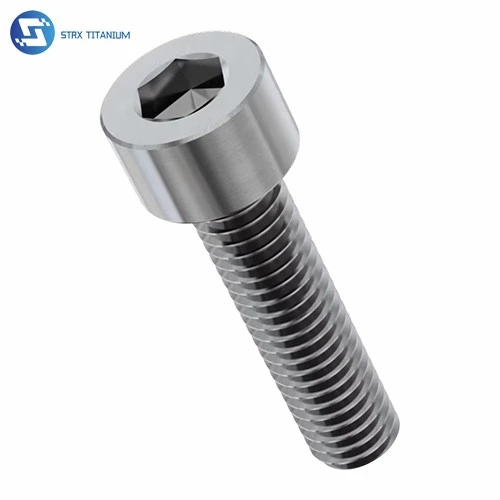
Tips for Proper Storage of Titanium Nuts
Based on the above factors, here are some tips for proper storage of titanium nuts:
- Store in a dry and clean environment: As mentioned earlier, it is important to store titanium nuts in a dry and clean environment to prevent oxidation and corrosion. The storage area should have a relative humidity of less than 50% and be free from any sources of moisture or corrosive substances.
- Use a sealed container or bag: To prevent exposure to air and moisture, it is recommended to store the nuts in a sealed container or bag. This can also help to prevent contamination.
- Handle with clean hands and tools: To prevent contamination, it is important to handle the titanium nuts with clean hands and tools. Avoid touching the nuts with dirty or greasy hands, and use clean tools when handling them.
- Store in a stable environment: To prevent damage from temperature and pressure, it is important to store the titanium nuts in a stable environment with a consistent temperature and pressure. Avoid storing the nuts in areas that are exposed to extreme temperatures or pressures.
- Label the storage container: To make it easier to identify the nuts, it is recommended to label the storage container with the grade, size, and quantity of the nuts. This can also help to prevent mix-ups and ensure that the correct nuts are used.
Conclusion
In conclusion, storage plays a crucial role in maintaining the quality and performance of titanium nuts. By following the tips outlined in this blog post, you can ensure that your titanium nuts are stored properly and remain in good condition for a long time. If you have any questions or need further information about the storage of titanium nuts, please feel free to contact us. We are a leading supplier of Titanium Bolts, Titanium Screw, and Titanium Threaded Rod, and we are always happy to help.
References
- ASM Handbook, Volume 2: Properties and Selection: Nonferrous Alloys and Special-Purpose Materials.
- Titanium: A Technical Guide, Second Edition.
- Corrosion of Titanium and Titanium Alloys.